handmade success
Jewelry Business Logo Ideas — Design Tips, Examples and Tools for 2026
Your jewelry logo is the face of your brand — here's how to design one that actually connects with customers, plus tools and real-world examples to get you started.
Your jewelry logo is often the first thing a potential customer sees, before they’ve looked at a single product.
A strong logo communicates what you sell and what your brand stands for in seconds. Done right, it builds recognition and trust. Done wrong, you look like every other seller in a crowded marketplace.
If you’re just starting out, you’re probably wondering: how do I create something that looks professional without spending a fortune? And what actually makes a jewelry logo work?
In this guide, we’ll walk through the five elements of an effective jewelry business logo, look at real examples from established brands, and cover the best design tools for makers working on a budget.
Ready to take your jewelry business further?
Once your logo is sorted, the next step is getting your materials, costs, and production tracking in order. Craftybase is built for jewelry makers — track your metals, gemstones, and findings, auto-calculate cost per piece, and sync orders from Etsy and Shopify.
👉 Just starting out? Read our complete guide first: How to Start a Jewelry Making Business
5 Elements of a Great Jewelry Business Logo

A great jewelry logo doesn’t happen by accident. These five principles separate logos that get remembered from ones that get scrolled past.
1. Simple Enough to Remember
The most effective logos are often the simplest. Think of a single gem outline, a minimalist ring shape, or a clean wordmark. Complex logos lose detail when scaled down to a business card or Etsy shop icon.
Resist the urge to include everything, your initials, a gemstone, a crown, and a flourish. Pick one strong visual idea and commit to it.
2. Eye-Catching at Small Sizes
Your logo will appear in more contexts than you expect: social media profile pictures, packaging labels, email headers, Etsy shop thumbnails. It needs to hold up at 32px just as well as it does at 300px.
Bold shapes and high-contrast colors read well at any size. Thin serif fonts and intricate details tend to disappear once you’re working small.
3. Reflective of Your Brand Personality
A logo for a fun, colorful resin jewelry brand should feel completely different from one for an elegant gold-and-diamond collection. Neither is better, they’re serving different audiences.
Before you start designing, list five words that describe your jewelry brand. Minimal. Luxe. Handcrafted. Bold. Feminine. Your logo should reflect those words, not contradict them.
4. Flexible Across Formats
A good jewelry logo works in full color on your website, in black-and-white on packaging, and reversed out on a dark background. If it only works in one version, it’ll cause headaches as you expand your marketing.
Design with versatility in mind, or ask your designer for multiple logo variations (horizontal, vertical, and icon-only) when you commission the work.
5. Consistent with Your Overall Aesthetic
Your logo is one part of your brand identity, not all of it. The fonts, colors, and visual style in your logo should carry through to your product photography, social media, packaging, and website.
If you’re starting from scratch, building a simple moodboard of brands and aesthetics you admire is a great way to find your visual direction before you pick up any design tool.
Examples from Established Jewelry Brands
Looking at established brands isn’t about copying them, it’s about understanding why their logos work and what you can adapt at a smaller scale.
Pandora
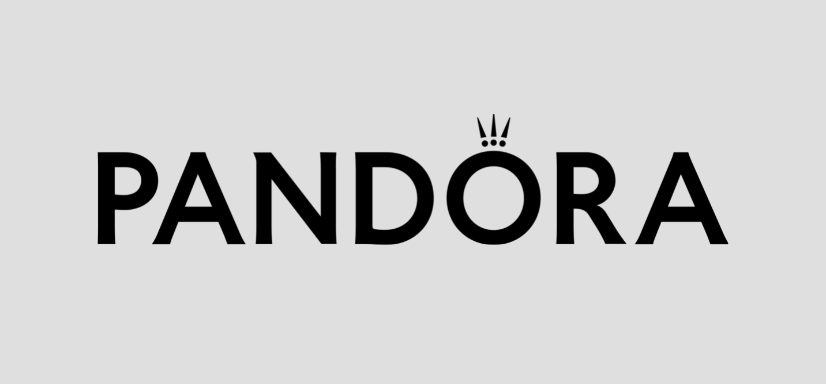
Pandora’s logo is clean and wordmark-only, no icon, no embellishment. The small crown above the “O” is subtle but meaningful: it signals quality and aspiration without being heavy-handed. The lesson here is that restraint can feel premium. You don’t need to illustrate what you sell to communicate it.
Tiffany & Co.
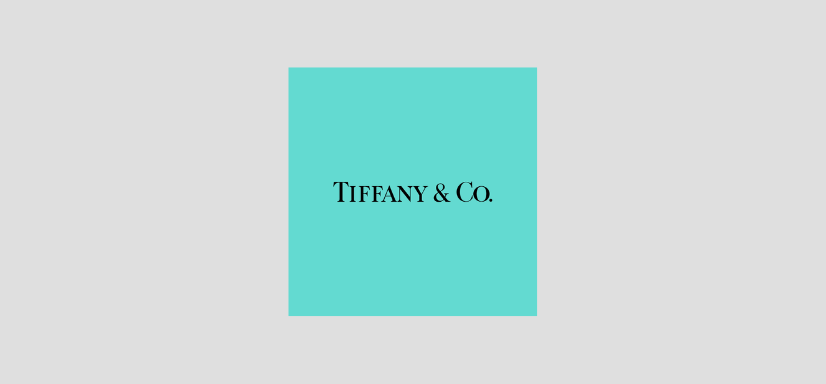
Tiffany’s power comes less from the logo itself than from color. “Tiffany Blue” (a specific robin egg blue standardised in partnership with Pantone) is so distinctive that the box alone has become the product. The takeaway for independent jewelry makers: owning a single, consistent brand color is more powerful than rotating palettes seasonally.
Swarovski
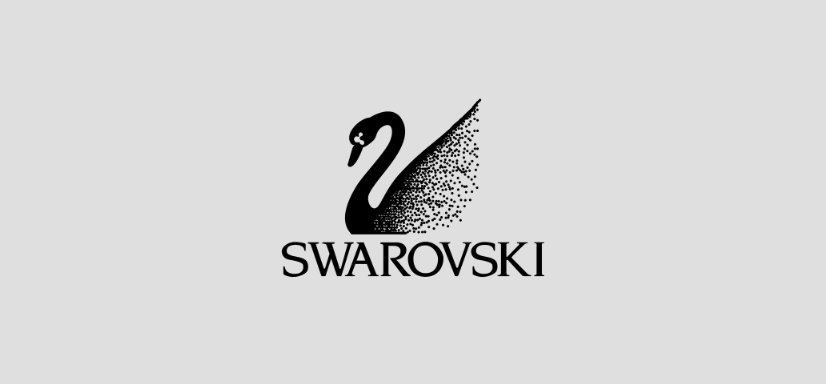
Swarovski’s swan icon is both memorable and meaningful, it connects directly to their product (crystal clarity, elegance). If you work with a specific material or technique, consider whether there’s an icon that could become your signature mark over time.
Design Tools for Making Your Jewelry Logo
You don’t need a large design budget to create a professional-looking logo. Here’s an honest overview of the main options for independent jewelry makers.
Canva
Canva is the go-to for makers who want creative control without a steep learning curve. It has hundreds of jewelry logo templates, a simple drag-and-drop editor, and a free tier that covers most needs.
Best for: Makers who want to create their own logo quickly and affordably.
Watch out for: Template logos can look similar to other sellers who started from the same base. Customise the fonts, colors, and icons enough that yours reads as genuinely yours, not a standard Canva template.
AI Logo Generators (Looka, Hatchful)
AI-powered tools like Looka and Shopify’s Hatchful generate logo options from a few brand inputs. They’re fast, you can have several options in under 10 minutes.
Best for: Getting a starting point to refine or test before committing to a paid designer.
Watch out for: Many makers use these tools, so there’s a real risk of visual similarity with other brands. Run your final choice through a quick reverse image search before committing.
Adobe Illustrator
Industry-standard vector design software, the most flexibility, the highest quality output, and the steepest learning curve. If you have design experience, this is the right tool. If you don’t, the time investment is steep.
Best for: Makers with some design background, or those hiring a freelance designer (ask them to work in Illustrator and deliver vector source files you can use anywhere).
Hiring a Freelance Designer
Platforms like Fiverr and 99designs have designers who specialise in jewelry brand identity. Expect to pay $50-$300 for a solid custom logo depending on experience level.
Best for: Makers who want a truly unique logo and are ready to invest in it.
What to ask for: Multiple initial concepts, vector source files (AI or SVG format), and ideally a brief style guide showing how to use the logo across different contexts.
Once You Have Your Logo
Once you have a logo you’re happy with, use it consistently everywhere, your Etsy shop, Instagram profile, packaging labels, business cards, and email signature. Consistency builds recognition, and recognition builds trust.
A logo is the visible part of your brand. But the makers who grow sustainably are the ones who also have the operational side sorted: knowing exactly what their materials cost, understanding their product margins, and keeping on top of inventory so they don’t run out of their best-selling components mid-season.
If you’re at the point where you’re thinking seriously about your brand identity, it’s also worth thinking about your business operations. A spreadsheet works up to a point, but as your product range grows, tracking materials across multiple recipes becomes genuinely difficult to manage.
👉 See how Craftybase helps jewelry makers track materials and cost their products: Jewelry Manufacturing Software
More guides for building your jewelry business
- How Much Does It Cost to Start a Jewelry Business?
- 150+ Jewelry Business Name Ideas (And How to Choose One That Lasts)
- Best Jewelry Inventory Software for Makers
- Jewelry Inventory Management for Small Businesses
Frequently Asked Questions
What makes a good jewelry business logo?
A good jewelry business logo is simple, memorable, and consistent with your brand personality. It should work at small sizes (like a social media profile picture) as well as large ones, and hold up in both color and black-and-white. The best logos reflect what makes your jewelry distinctive — whether that's luxury, handcrafted character, bold color, or minimalist elegance. One strong visual idea executed well always beats a complex design with too many competing elements.
How much does it cost to create a jewelry business logo?
Logo costs range from free to several hundred dollars, depending on your approach. DIY tools like Canva and Shopify's Hatchful are free or low-cost. AI logo generators like Looka cost around $20–$65 for a full brand kit. Hiring a freelance designer on Fiverr or 99designs typically runs $50–$300 for a solid jewelry logo. For most independent makers just starting out, Canva or an AI generator is a perfectly reasonable first step — you can always invest in a professional rebrand once your revenue is more consistent.
What symbols and icons work well in a jewelry logo?
Common jewelry logo symbols include gemstones, diamonds, rings, crowns, leaves, and minimal geometric shapes. The right choice depends on what makes your jewelry distinctive — a resin brand might use abstract organic forms, while a fine metalwork brand might lean into clean lines and a simple wordmark. Avoid overused generic icons (like a plain diamond outline) unless you can execute them in a way that's clearly, unmistakably yours.
What colors work best for a jewelry business logo?
The right colors depend on your brand positioning. Black, white, and gold signal luxury. Pastels and muted tones feel artisanal and approachable. Bold, saturated colors suit statement jewelry targeting a younger market. Whatever palette you choose, pick one or two brand colors and use them consistently everywhere — Tiffany's entire brand recognition is built on owning a single specific shade of blue.
Do I need a logo before I start selling jewelry?
You don't need a perfect logo to start selling, but having something consistent from day one makes a real difference. Even a simple wordmark in a font that suits your brand is better than no logo at all. Many successful jewelry makers start with a DIY Canva logo and refine their branding later as revenue grows. What matters most early on is that your logo, product photography, and shop description all feel like they come from the same brand.
Ready to take your jewelry business further?
Once your logo is sorted, the next step is getting your materials, costs, and production tracking in order. Craftybase is built for jewelry makers — track your metals, gemstones, and findings, auto-calculate cost per piece, and sync orders from Etsy and Shopify.