handmade success
How to Start a Jewelry Making Business in 2026
Starting a handmade jewelry business? This guide covers everything from writing a quick business plan and choosing your niche to pricing your pieces correctly and getting inventory under control.
A handmade jewelry making business can be a fun and rewarding way to earn a living. Online jewelry sales continue to grow year on year, and with Etsy hosting millions of active sellers and Shopify powering hundreds of thousands of independent storefronts, there’s never been more opportunity for makers who get the basics right.
So, just how do you go from making occasional jewelry pieces for friends and family to a thriving, growing enterprise? This guide gives you the practical steps to point you in the right direction.
Last updated: April 2026
Need to get your raw material and product inventory under control?
Try Craftybase - the inventory and manufacturing solution for DTC sellers. Track raw materials and product stock levels (in real time!), COGS, shop floor assignment and much more.
It's your new production central.
Write a (quick!) business plan

Creating a business plan is important for any business, but especially if you’re starting a handmade jewelry making business, you’ll potentially have higher-than-usual operating costs due to raw materials like precious metals and findings.
This plan does not need to be an elaborate document. Start with a basic framework and keep refining it as you learn more about the jewelry market and the products you want to sell.
There are many free business plan templates available online, including some designed specifically for jewelry businesses.
As a general rule, a jewelry business plan should include:
- your goals and objectives (what do you want to get out of running your own jewelry business?)
- how you plan to achieve them (the steps between now and selling successfully)
- your target market (who are you going to sell to?)
- where you plan to sell your jewelry products
- how you’re going to reach your target customers
- a rundown of startup and operating costs, and estimated cash flow
On that last point, if you’re trying to figure out startup costs before you write the plan, our jewelry business startup cost breakdown covers realistic estimates at each stage, from a home setup under $500 through to wholesale-ready production.
Research the competition

Research the competition before starting any business, and in jewelry, this matters more than most. The market is growing rapidly, but there are also thousands of established jewelry makers running successful businesses with products that overlap with yours in some way.
In this research period, you’ll want to find out:
- what other jewelers are selling and at what price points
- what quality of materials they’re using
- where they’re selling (Etsy? Shopify? WooCommerce? Faire? A combination?)
- what kind of reputation they have (check ratings and customer reviews)
- how they’re marketing their products (are they appearing in search results, running social media ads?)
This research helps you refine your business goals, build confidence in what products you’ll sell, and develop a pricing strategy that accounts for your actual costs, not just what competitors appear to charge.
Decide what kind of jewelry you want to make
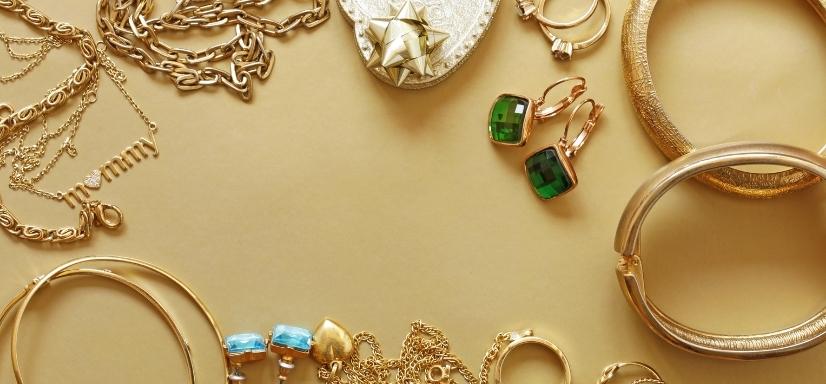
Do you want to focus on bracelets, necklaces, or earrings? Or mix it up across categories? Once you have an idea of what you want to make, you can start researching supplies and sourcing.
Selling batch or made-to-order jewelry
Made-to-order jewelry is typically priced higher than batch production because each piece is unique and made specifically for the customer. The target market is usually people who want a one-of-a-kind piece or something they can’t find anywhere else.
Batch production jewelry, on the other hand, is made in larger quantities and usually (though not always) at a lower price point. This makes it accessible to a wider audience.
The real advantage of batch production is that once your product range is finalised, you can focus on refining your process. That means tighter control over your costs and margins. You can also consider outsourcing if it makes financial sense, and having process documentation from the outset makes that much easier. Read more in our guide to creating SOPs for your handmade business.
Choose a great jewelry business name
A good name is critical for a small jewelry business. Jewelry is about emotion, people aren’t just buying something functional, they’re buying something that speaks to them. The right name helps you connect with the right customers before they’ve even looked at a product.
👉 Read our article for great ideas on names for your jewelry business →
Spend time on your jewelry logo design
Your logo is the first thing potential customers will see.
A great logo communicates what you sell and what your business stands for, before anyone clicks through to your products. It’s worth investing time early to get this right.
👉 Read our article for tips on how to create the perfect logo for your jewelry business →
Work on your jewelry production process
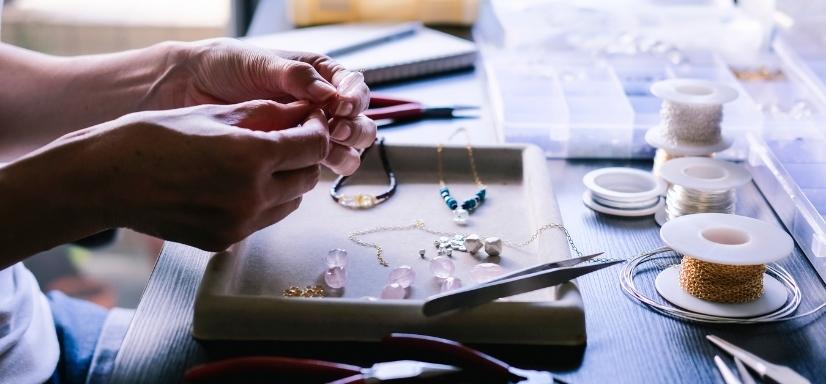
Before you start selling, practice making your pieces until you have a reliable process that produces consistent results. This matters for two reasons: quality control and cost accuracy.
When you know how long each piece takes to make, you can calculate your labor cost per unit. When you know exactly which materials go into each design, you can price with confidence. Both of these feed directly into your profit margin, so don’t skip this step.
Ensure you have a profit margin from the outset
When you’re just starting out, it can be tricky to know how to price your jewelry. You want to charge enough to cover materials and your time, but you don’t want to scare customers away with prices that feel high.
A common starting point is to calculate the full cost of materials for each piece, then add on a margin for your time and labor, plus any overhead (platform fees, packaging, etc.). The tricky part is that most makers underestimate what it actually costs them to make something, especially when precious metal prices fluctuate or they’re buying small quantities at retail. Our free jewelry pricing calculator makes this straightforward: enter your materials, labor rate, and target margin and it calculates your retail, wholesale, and Etsy prices instantly.
Craftybase helps new jewelry businesses track their inventory and margins from day one. You can see exactly what each piece costs to make, what you sold it for, and whether you’re actually making money. That information is what separates a sustainable jewelry business from a very expensive hobby.
Consider selling your jewelry online
Sticking to offline sales channels (boutiques, local markets, craft fairs) is a perfectly valid strategy, especially early on. But if you want to reach bigger markets and grow, selling online opens up a lot of possibilities.
Selling jewelry online has matured significantly over the past few years. Options now range from Etsy (a marketplace with built-in search traffic for handmade goods) to Shopify (for building your own brand and storefront), WooCommerce, and wholesale platforms like Faire.
For most makers just starting out, Etsy is worth trying first, it brings its own audience of buyers already searching for handmade jewelry, which lowers the marketing burden. When you’re ready to invest in brand-building and want more control, a Shopify store is the natural next step. Many established jewelry makers run both.
Promote your jewelry business

The most successful jewelry businesses have a marketing strategy, a plan for how you’re going to reach enough of your target customers to make consistent sales.
Even on a marketplace like Etsy, you’ll need to stand out from thousands of other listings. Good product photography, well-researched tags and titles, and regular shop updates all contribute to visibility.
Offline, research craft fairs in your area to see if they’re a good fit for your products. Developing relationships with local boutiques (and setting up a consignment arrangement) is another solid way to get early sales moving.
Have an inventory management strategy from day one
Inventory management is often an afterthought for new jewelry makers. It shouldn’t be. The earlier you put a system in place, the less painful it is later, and the more accurately you’ll know what you have, what it costs, and what to reorder.
Starting with Excel or a spreadsheet works for many makers in the early days. It’s familiar and it costs nothing. But as your product range grows, spreadsheets become harder to trust. Manual entry errors creep in, COGS calculations get complicated, and integrating with your sales channels requires workarounds that don’t scale.
We also have a free jewelry inventory spreadsheet you can download if you’re just getting started and want something simple to begin with.
When you’re ready for something purpose-built, dedicated jewelry inventory software built for makers (like Craftybase) is designed specifically for this. For a practical walkthrough of exactly how to set up tracking for materials, finished pieces, and recipes, see our guide to jewelry inventory management for small businesses.
With Craftybase, you can track your bill of materials, production runs, and stock levels across all your sales channels in one place. It’s the kind of system that makes tax time manageable and helps you spot which products are actually profitable.
Frequently Asked Questions
How much does it cost to start a jewelry making business in 2026?
A basic home setup (tools, starter materials, and a selling platform) can cost as little as $300-$500. From there, costs scale with your ambitions: a more established setup with a full tool kit, professional photography gear, and shop fees typically runs $1,500-$3,000. Our detailed jewelry startup cost breakdown covers each stage so you can plan accurately.
Do I need a business license to sell handmade jewelry?
Requirements vary by location, but in the US most jewelry makers selling online register as a sole proprietor or LLC and obtain a basic business license from their state or county. If you collect sales tax (which most states now require for online sales), you'll also need a sales tax permit. It's worth talking to a local accountant or using your state's small business resources to confirm what applies to you.
Should I start selling jewelry on Etsy or Shopify?
Start with Etsy if you want quick access to buyers already searching for handmade jewelry, the built-in traffic lowers the marketing barrier. Move to (or add) Shopify when you're ready to build your own brand, own your customer list, and have more control over your store. Many experienced jewelry makers run both simultaneously. Craftybase connects to both platforms so your inventory and costs stay in sync regardless of where your orders come in.
How do I price my handmade jewelry to make a profit?
Start with your true cost to make each piece, materials, labor (your time at a realistic hourly rate), packaging, and a share of overhead like platform fees and tools. Add your desired profit margin on top of that. Most makers underestimate costs early on because they miss small material amounts or don't count their own time. Craftybase calculates cost per unit automatically from your recipes, so you know your floor price before you set a selling price.
How do I track materials and inventory for my jewelry business?
A spreadsheet works fine when you're getting started, but it gets unwieldy quickly (especially when precious metal prices change or you're managing dozens of material variations. Dedicated inventory software like Craftybase tracks your materials and finished pieces automatically, deducting stock as you manufacture and syncing with your Etsy or Shopify orders. That means you always know what you have on hand and what needs reordering) without counting shelves manually.
Ready to put your jewelry business on a solid footing? Try Craftybase free for 14 days, no credit card required. Thousands of jewelry makers use it to keep their pricing, inventory, and costs in order from day one.