marketing
Best Etsy Store Name Generators for 2026 — Plus a Naming Framework That Actually Works
A verified list of free Etsy name generators, updated for 2026 — plus a practical framework for choosing a name that sounds right, looks right, and is actually ownable.

Picking a name for your Etsy shop feels like it should take 20 minutes. Then you sit down and realise every good idea is either taken, too generic, or inexplicably awkward to say out loud. Two hours later you’re staring at a blank text field wondering if “MoonlitCraftsCo” is actually fine or just deeply mediocre.
Name generators exist for exactly this moment. They won’t hand you the perfect name, but they’ll unstick you. They surface combinations you wouldn’t have thought of, reveal what styles you’re drawn to, and help you move from blank page to short list.
Want to start right now?
Try our free Etsy shop name generator — pick a style, tell it what you make, and get 8–10 tailored ideas instantly.
Last updated: April 2026. All tools below have been verified as active and URLs confirmed working.
Need to get your raw material and product inventory under control?
Try Craftybase - the inventory and manufacturing solution for DTC sellers. Track raw materials and product stock levels (in real time!), COGS, shop floor assignment and much more.
It's your new production central.
The tools: 10 Etsy name generators worth trying
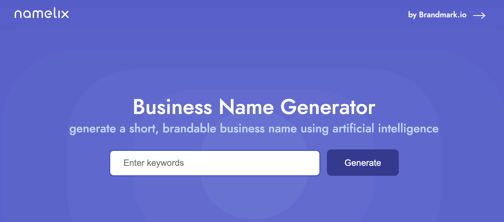
Namelix
Namelix uses AI to generate short, brandable names based on keywords you enter. It’s probably the most polished generator on this list, the results feel like names a human creative might actually pitch, not random dictionary mash-ups.
Enter a couple of keywords (your craft type, a quality you want to convey) and Namelix returns dozens of options with style filters: short, alliterative, compound, made-up words. It learns from the names you save and refines future results. Worth spending 10-15 minutes with.
Looka Business Name Generator
Looka’s generator pairs name suggestions with instant logo mockups, which is genuinely useful when you’re trying to visualise what a name would look like as a brand. Enter a keyword, pick your industry, and it produces a batch of brandable options alongside simple logo concepts.
The design previews help you quickly rule out names that just don’t look right in a logo context, which saves time later.

Shopify Business Name Generator
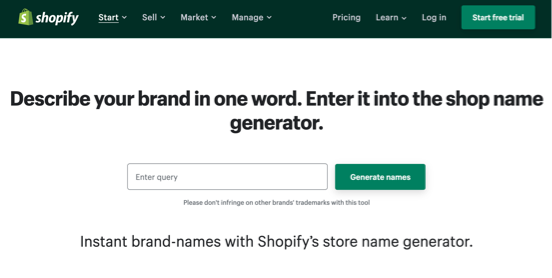
Shopify’s free tool is simple but solid. Enter a keyword and it returns a list of name ideas with domain availability checked for each. You can filter by industry, useful if you want names that read as handmade, craft-focused, or artisan rather than generic.
It won’t give you as many options as Namelix but it’s fast, clean, and checks .com availability in real time.
Name Station
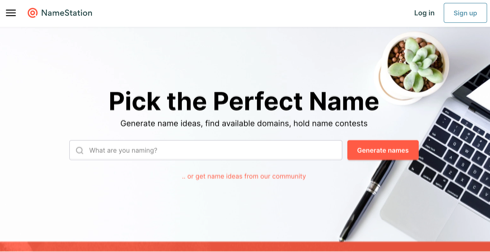
Name Station takes a slightly different approach, alongside the generator, it has a crowdsourcing feature where you can post a naming contest and get suggestions from real people. If you’ve been going in circles and want fresh eyes, this is worth trying.
The generator itself works on keywords and checks domain availability. Useful for getting a human touch when algorithm-generated names start to all blur together.
Knowem
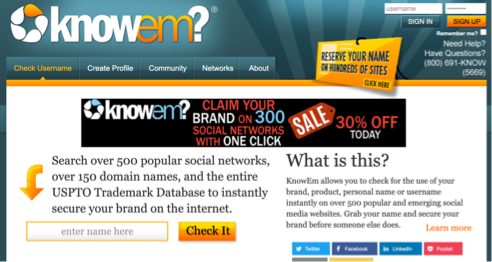
Knowem is less of a generator and more of an availability checker, but it’s extremely useful at the right stage. Enter a name you’re considering and it checks availability across 500+ social networks, domain extensions, and trademark databases simultaneously.
Use it after you’ve narrowed to a short list. Finding out your favourite name is already taken across Instagram, Pinterest, and TikTok before you’ve printed any packaging is worth the few minutes it takes.
Business Name Generator
A clean, fast tool that takes your keywords and applies them to your niche. It checks domain availability and sorts results by availability. The interface is straightforward, no frills, no account required.
Good for a quick second pass when Namelix hasn’t produced anything that clicks.
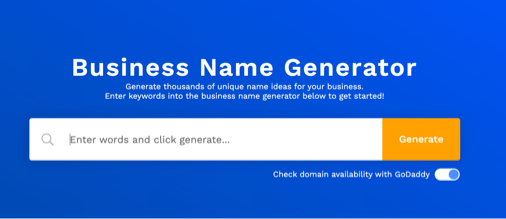
Hostinger Business Name Generator
(Formerly Zyro (now part of Hostinger’s suite) Hostinger’s AI-powered tool generates brandable name ideas based on a keyword and checks domain availability in real time. The results lean towards clean, modern-sounding names) good if you want something that would work equally well on Etsy and Instagram.
It also links directly to domain registration if something catches your eye, which speeds up the process.
Oberlo Business Name Generator
(Now part of Shopify’s suite), if you’re using Shopify’s tool and want a second batch of ideas, run the same keywords through Namelix and Looka as well. Different algorithms surface different styles.
ChatGPT / AI brainstorming
A free ChatGPT session is a genuinely practical name-brainstorming tool, and most makers haven’t figured this out yet. Unlike preset generators, you’re having a conversation. You can push back, ask for variations, and describe your aesthetic in natural language.
The key is being specific. A vague prompt returns generic output. The more detail you give (craft type, the feeling you want to create, names you’ve already rejected and why) the better the results.
Ready-to-use ChatGPT prompts for Etsy shop names:
For soap and bath makers:
“Give me 20 Etsy shop name ideas for a small-batch soap maker who uses botanical ingredients and wants the name to feel grounded, a little earthy, and non-clinical. Max 3 words each. Avoid anything with ‘pure’, ‘clean’, or ‘natural’, those feel too generic.”
For candle sellers:
“I make hand-poured soy candles with unusual, atmospheric scents. I want a shop name that sounds poetic, slightly moody, and would appeal to someone who buys books and burns candles on a rainy afternoon. Give me 15 options, two or three words maximum.”
For jewellery makers:
“I’m a jewellery maker specialising in sterling silver and semi-precious stones. I want a shop name that feels artisan, not mass-produced. Something a little sculptural, like the work itself. Give me 20 ideas, avoid anything with ‘gem’, ‘jewel’, or ‘bling’.”
For a broader craft mix:
“I make handmade gifts for a general audience, ceramics, candles, and textile goods. I want a studio-style name that’s not tied to any one product. It should feel warm, independent, and like it belongs to a real person rather than a brand. 20 ideas, please.”
Once you have a list, follow up with: “Can you tell me which of these feel most distinct from each other, and which ones sound similar enough to be confused?” That conversational layer is what generators can’t do.
ChatGPT won’t check domain or social availability, pair it with Knowem for that step.
A practical framework for choosing your Etsy name
Generators give you raw material. This framework helps you cut the list to a winner.
1. The say-it-out-loud test
Say the name out loud five times. Ask someone else to spell it after hearing it once. If there’s hesitation (if they add a letter that isn’t there, or hyphenate something that isn’t hyphenated) that’s a red flag.
Names that are hard to spell are hard to find again. If a customer loves your shop but can’t remember how to spell it, you lose the repeat visit.
2. Phonetics and sound
Some sounds are more memorable than others. Short words with hard consonants (K, T, B sounds) tend to stick. Think about how the name sounds in a sentence: “I bought it from ____”, does it flow? Does it sound credible?
Alliteration helps (two words starting with the same sound). So does rhythm, names with a clear beat are easier to remember than irregular ones.
3. The brandability checklist
Run each shortlisted name through these checks:
- Is it specific enough? “HandmadeGoods” describes nothing and everyone. “CopperKettleCrafts” has texture.
- Does it scale? If you make candles now but might add soap or skincare in two years, “FlameAndWickCo” might box you in. “WildeVeraStudio” gives you room to grow.
- Is it original? Search Etsy. Search Google. Search Instagram. You want a name you can own cleanly.
- Does it avoid numbers and special characters? These create friction in every context, URLs, social handles, verbal referrals.
- Would it survive a rebrand? Names tied too tightly to a trend or a specific product can age badly.
4. Domain and handle availability
With over 8.7 million active Etsy sellers (up from 1.7 million in 2019) the platform is crowded. Your Etsy shop name alone won’t cut through. You need matching (or near-matching) presence across:
- Your .com domain (even if you don’t use it immediately, register it so someone else can’t)
- Instagram handle
- Pinterest profile
- TikTok username
Use Knowem to check all of these at once. If the exact name isn’t available across all four, look for a consistent variation, adding “Studio”, “Co”, “Shop”, or “HQ” works without diluting the brand.
For your domain, check Namecheap or Google Domains for pricing. A .com costs around $10-15/year and is worth it for the credibility.
5. Trademark basics
Before you commit, run a quick trademark search. In the US, use the USPTO TESS database. In Australia, use IP Australia. You’re looking for existing registered trademarks that are identical or confusingly similar to your chosen name in the same goods category (Class 26 covers handmade accessories and crafts).
You don’t need to be a lawyer to do this search, just check whether anything obviously similar exists. If you find something close, get advice before investing in branding.
What to consider when choosing an Etsy shop name
The framework above covers the mechanics. Here are a few broader principles worth keeping in mind.
Relevance matters, but not as much as you think. A name like “ClayAndThread” signals what you make. But “Figment Studio” doesn’t, and plenty of successful handmade shops use abstract names. What matters more is consistency: whatever name you choose, you want it to work across your product photography, packaging, and social presence.
Short names are generally better. Not always, but shorter names are easier to type, remember, and say. Under 15 characters is a good target for Etsy, which has a 20-character limit on shop names.
Make it SEO-friendly, but don’t chase keywords. Including words like “jewellery” or “ceramics” in your name does technically help with search. But a keyword-stuffed name like “HandmadeJewelryEtsyShop” looks amateur. There are better ways to optimise your Etsy SEO, your shop title, listing titles, and tags do more work than your shop name.
Look at what works in your niche. Spend 20 minutes on Etsy looking at the top shops in your category. Note what naming patterns repeat. Note which names feel credible and which feel cheap. You’ll develop an instinct quickly.
Checking availability on Etsy
Once you have a shortlist, head to Etsy and check each name properly. Searching for a shop name in Etsy’s search bar isn’t reliable, shops with private settings may not appear there.
The right way: start the shop creation process and use the “Check Availability” button. If a name is taken, Etsy will tell you immediately.
If your first choice is gone, Etsy recommends adding a word like “Studio”, “HQ”, “Designs”, or “Co” to maintain your branding while making it unique. Etsy shop names are case-insensitive (so “CopperKettleCo” and “copperkettle co” are treated the same).
Name availability checklist
Before you commit to a name, run it through this checklist. It takes about 10 minutes and saves a lot of pain later.
On Etsy:
- Search the name on Etsy’s main search bar (to see if similar shops appear)
- Start the shop creation process and use the “Check Availability” button, this is the definitive test
On social media:
- Instagram handle available (exact match or close variant)
- Pinterest profile available
- TikTok username available
- Facebook Page name available (if you plan to use it)
Domain:
- .com available, check on Namecheap or Google Domains
- If .com is taken, check whether the owner is actively using it (not just parked)
Brand safety:
- Quick Google search shows no established business with the same name in a similar category
- USPTO TESS trademark search shows no registered marks that are identical or confusingly similar
- Name doesn’t accidentally spell or sound like something unintended
Practical tests:
- Say it out loud five times, does it flow naturally?
- Spell it aloud to someone, do they get it right first time?
- Write it in title case and all lowercase, does it look clean both ways?
- Would you be happy to put this on packaging in three years’ time?
Use Knowem to check the social and domain availability across all platforms in one search.
Looking for niche-specific name ideas?
If you make a particular type of product and want name inspiration specific to that craft, we’ve put together niche name guides:
- 30 candle business name ideas
- Soap business name ideas
- Jewelry making business names
- Bakery name ideas
- Cute Etsy shop name ideas
These go deeper than generators, they include curated name examples, naming patterns that work for each craft, and advice on what to avoid.
The name is just the start
Once you’ve got a name you’re happy with, the real work begins: building the business behind it.
That means tracking which materials went into each product, knowing your true cost of goods so you’re not underpricing, and keeping inventory accurate as orders start coming in. Most new Etsy sellers start with a spreadsheet, and it works, until it doesn’t. Once you’re managing a dozen products across multiple materials, spreadsheets start to break down.
Craftybase Etsy inventory management software is purpose-built for handmade sellers on Etsy. It syncs directly with your shop, tracks raw material and finished product inventory, calculates COGS, and helps you understand what you’re actually making on each sale, not just what it’s costing you.
Start a free 14-day trial and see how much clearer the business side becomes with the right tools.
Frequently Asked Questions
What is an Etsy name generator?
An Etsy name generator is an online tool that suggests business name ideas based on keywords you enter. Most combine your input with algorithms or AI to produce unique word combinations, often checking domain and social media availability at the same time. They're useful for breaking through creative blocks and discovering names you wouldn't have thought of on your own.
How do I choose a good name for my Etsy shop?
A good Etsy shop name is short, memorable, easy to spell, and relevant to what you make. Avoid numbers, special characters, and names that are too generic to stand out. Check availability on Etsy, Google, and across social platforms before committing — you want a name that's ownable everywhere. When in doubt, say it out loud: if it's awkward to pronounce or spell, customers will struggle to find you again.
Can I change my Etsy shop name after I open it?
Yes — Etsy allows you to change your shop name once for free after opening. After that, you'll need to contact Etsy support for additional changes. It's worth getting the name right before you launch, since a name change can affect your search visibility and confuse customers who already know you by your original name. Treat the first change as a one-time safety net, not a plan B.
Do I need to check for trademark conflicts before using a name?
Yes, and it's easier than most people think. In the US, run a free search on the USPTO TESS database for names that are identical or confusingly similar to yours in your product category. You're not looking for a legal opinion — just a quick check that nothing obvious comes up. If you find something close, get advice before printing packaging. A name change at launch is inconvenient; a name change after 500 sales is painful.
How many Etsy sellers are there in 2026?
Etsy reported over 8.7 million active sellers on the platform — up from around 1.7 million in 2019. That growth makes standing out with a distinct, memorable shop name more important than ever. A well-chosen name, combined with good product photography and a clear shop description, helps you cut through in a very crowded marketplace.
What should I do after I pick my Etsy shop name?
Register a matching .com domain (even if you're not building a website yet — it prevents someone else taking it). Claim the same handle on Instagram, Pinterest, and TikTok. Then shift focus to the operational side: price your products properly, track your material costs, and connect your shop to an inventory tool like Craftybase so you're set up to run profitably from day one — not just creatively.