handmade success
How to Fix Etsy Inventory Errors in 2026
Seeing an Etsy inventory error and not sure what it means? Here's a plain-English guide to the most common Etsy inventory errors — and exactly how to fix each one.

If you’re an Etsy seller who’s just hit a wall with an inventory error, you’re not alone. These errors show up at the worst possible times, right when you’re trying to publish a new listing, or when a buyer flags that something is “out of stock” but you know you have stock sitting in your workshop.
The confusing part is that “inventory error” covers a lot of different problems on Etsy. Some are quick fixes. Others point to a deeper issue with how your listings are set up.
This guide covers the most common Etsy inventory errors you’re likely to run into, what causes them, and how to fix each one.
Last updated: March 2026
Ready to stop chasing inventory errors?
Craftybase is the Etsy inventory software built for makers — track raw materials and finished stock, sync orders automatically, and always know what you have on hand. Try it free for 14 days, no credit card required.
“To publish, fix: Inventory”
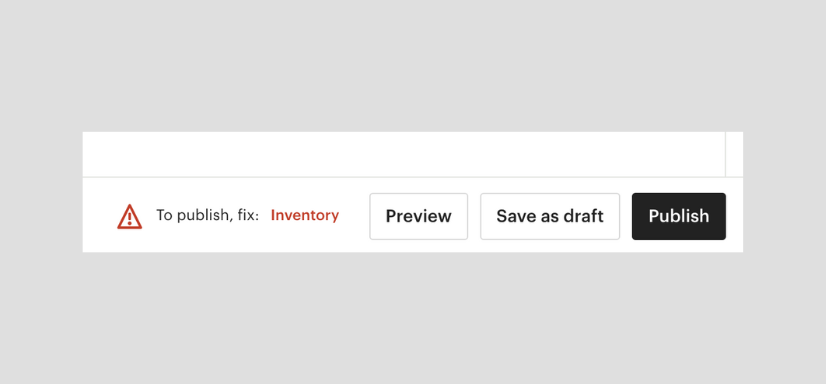
This is probably the most searched Etsy inventory error. It shows up when you try to publish a listing and something in the inventory section isn’t set up correctly.
The most common cause: You’ve selected “I offer more than one” for an attribute (like color or size), but you haven’t added the actual variations yet.
Here’s what usually happens. You’re setting up a new listing for, say, a hand-dyed scarf. Under Primary Color, you tick “I offer more than one” because you make them in three colors. But then you skip the variations section and try to publish. Etsy blocks it, because you’ve told it variations exist, but then provided none.
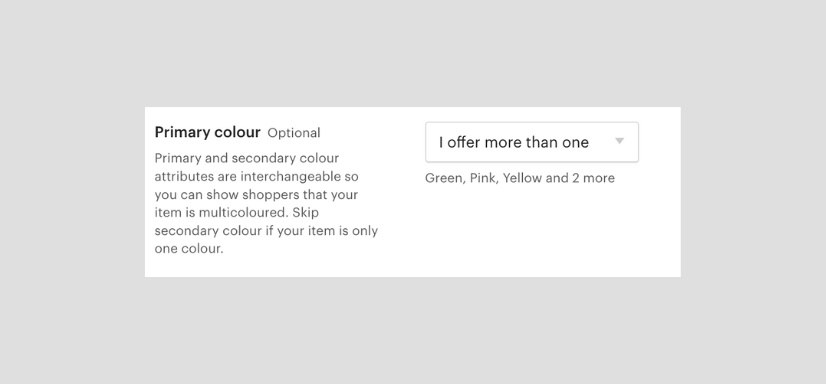
How to fix it:
- Go to the “Variations” section of your listing
- Click “Add variations”
- Select the attribute you’re offering (color, size, material, etc.)
- Enter every option you stock (e.g., Blue, Green, Red)
- Add a quantity for each variation
- Click “Update” and then try publishing again
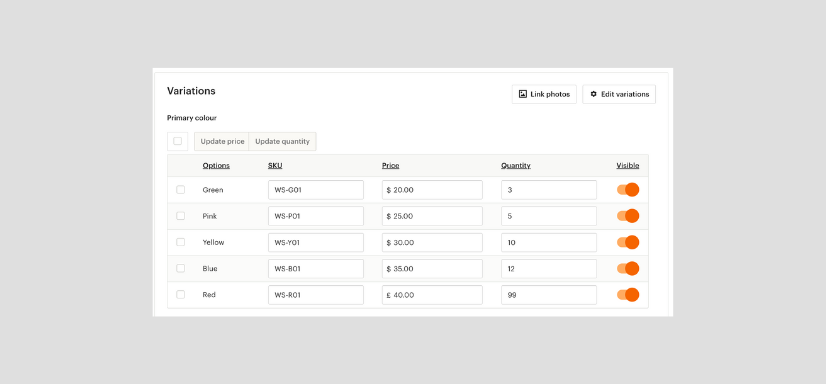
If you still see the error after adding variations, double-check that every attribute set to “I offer more than one” has corresponding variation entries. One missing attribute will hold up the whole listing.
Listing Shows as Out of Stock When You Have Inventory
This one causes a lot of confusion, and lost sales. Your listing shows as “sold out” or unavailable on Etsy, but you have product sitting right there.
What’s happening: Etsy tracks inventory by the quantity you’ve entered on each listing (or variation). When that number hits zero, Etsy marks the listing as out of stock, regardless of what’s actually in your workshop.
This usually means one of three things:
- You set the quantity to a low number and sold through it without noticing
- A variation has a quantity of zero and buyers are landing on that option first
- You renewed a listing but forgot to reset the quantity
How to fix it:
- Open the listing in your Etsy Shop Manager
- Go to Inventory and pricing
- Update the quantity for the listing (or each variation if applicable)
- Click Save
Going forward, it helps to set a higher initial quantity, Etsy doesn’t charge you for “unused” stock, so there’s no reason to be conservative here. If you’re tracking real inventory elsewhere (like in Craftybase or a spreadsheet), use Etsy’s quantity field more as a buffer than as a live count.
Inventory Quantities Not Updating After a Sale
You sold three items today. But when you check your Etsy listing, the quantity hasn’t dropped. Or it’s dropped inconsistently, some orders deducted, others didn’t.
Why this happens: Etsy is usually reliable about deducting inventory on purchase, but timing and payment status can affect it. A few common causes:
- Payment processing lag: Etsy holds some orders in “payment processing” before finalizing. The inventory count may not deduct until payment clears
- Etsy system delays: During high-traffic periods (holiday season, big sales events), Etsy’s inventory updates can lag behind by minutes to hours
- Third-party tool conflicts: If you’re also managing inventory in another tool and pushing counts back to Etsy, you might accidentally overwrite the correct lower quantity with an old higher one
How to fix it:
First, wait it out, if it’s been less than 24 hours, the number usually corrects itself. If you’re in a holiday rush and counts aren’t updating, manually check each recent order in Shop Manager to verify payment status.
If third-party sync is the culprit, the fix depends on which tool you’re using. With Craftybase, the Etsy integration imports your orders so Craftybase tracks real usage, it doesn’t push counts back to Etsy, which avoids this exact problem.
Variations Inventory Is All Over the Place
You have a listing with multiple variations (say, different sizes of a candle). The total quantity looks wrong, or one variation is showing zero when you know you have stock.
The issue: Etsy stores inventory per variation, not per listing. So if you have a candle in Small, Medium, and Large, you need to set a quantity for each size separately. If you only set the total quantity at the listing level, Etsy may distribute it unevenly, or not at all across variations.
How to fix it:
- Open the listing and go to Inventory and pricing
- Find the variations grid, you’ll see each combination listed (e.g., “Small”, “Medium”, “Large”)
- Set an individual quantity for each row
- Make sure no row is left at 0 unless you genuinely have none in stock
- Save the listing
Worth double-checking: if you added new variations to an existing listing, the new ones often default to zero quantity. Easy to miss.
Inventory Errors After Syncing with Another Platform
If you sell on both Etsy and Shopify (or another channel), inventory sync errors are a particular headache. You update stock in one place, and suddenly Etsy is showing the wrong number.
This comes down to how syncing works between platforms. Many sync tools do a bidirectional sync, when stock changes on either side, it tries to mirror it everywhere. That sounds good in theory, but it breaks down when:
- You’re selling the same product under different SKUs on each platform
- Two orders come in close together (a race condition in the sync)
- You have products that only exist on one channel
Syncing Etsy and Shopify inventory covers this in detail, but the short version: pick one platform as your “source of truth” for stock levels, and configure your sync tool to flow outward from there rather than doing a full bidirectional sync.
Craftybase handles this by sitting above your sales channels, it imports orders from both Etsy and Shopify, tracks real material usage through your recipes, and lets you see true stock at the maker level. You’re not syncing counts between platforms; you’re tracking the actual inventory that gets consumed when you manufacture.
How to Prevent Inventory Errors Long-Term
The common thread across all of these errors is that Etsy’s inventory system is pretty simple, it’s designed for resellers who stock a fixed number of units, not for makers who produce in batches.
A few habits that help:
- Set higher buffer quantities on Etsy — use Etsy’s quantity field as an approximation, not a precise count
- Review your variations grid after any listing update — it’s easy to accidentally reset a quantity when editing other fields
- Use a dedicated tool to track real inventory — Etsy’s built-in stock tracking doesn’t connect to your raw materials, so you’re always flying blind on what you can actually make
If you’re managing materials and finished goods across multiple Etsy listings, a spreadsheet starts breaking down fast. That’s usually the point where makers start looking at purpose-built tools, something like Craftybase’s Etsy inventory tracking, which ties your material stock directly to what you manufacture and sell.
You can also start with a free Etsy inventory spreadsheet if you’re not quite at the tool stage yet.
Frequently Asked Questions
What does "To publish, fix: Inventory" mean on Etsy?
This error means your listing has an incomplete inventory configuration, usually because you selected "I offer more than one" for an attribute (like color or size) but didn't add the actual variations. Fix it by going to the Variations section of your listing, adding entries for each option you offer, and setting a quantity for each. Then try publishing again.
Why does my Etsy listing show as out of stock when I have inventory?
Etsy goes by the quantity you entered in your listing, it doesn't know what's physically in your workshop. If that number hit zero, the listing shows as sold out. Open the listing in Shop Manager, go to Inventory and pricing, update the quantity (or each variation's quantity), and save. If you have variations, make sure none of them are sitting at zero unintentionally.
Why isn't Etsy deducting inventory after a sale?
Etsy usually deducts inventory once payment is confirmed (not at the moment the order is placed. If the order is still in "payment processing," the count may not update yet. During busy periods, updates can also lag by a few hours. If a third-party inventory tool is syncing counts back to Etsy, that can overwrite the correct lower number) check your sync tool settings if this happens repeatedly.
How do I fix inventory errors on Etsy listings with variations?
With variations, Etsy tracks inventory per variation row, not as a single total. Open the listing, go to Inventory and pricing, and check the quantity for every combination (e.g., Small/Blue, Medium/Blue, Large/Blue). New variations added to an existing listing often default to zero, so they're easy to miss. Set a quantity for each row you actually stock, and save.
Does Craftybase fix Etsy inventory errors?
Craftybase doesn't fix Etsy's own listing errors (like the publish validation issues), but it does solve the deeper problem: knowing your actual stock. Craftybase imports your Etsy orders automatically, tracks raw material usage through your recipes, and gives you a real-time view of what you have and what you can make. That stops the guesswork that causes most inventory headaches in the first place.
For more on managing your Etsy inventory day-to-day, see: