marketing
Best Handmade Products to Sell for Maximum Profits in 2026
The best handmade products to sell aren't just popular. They combine high perceived value with low production costs. Here's what to make for maximum profit margins.
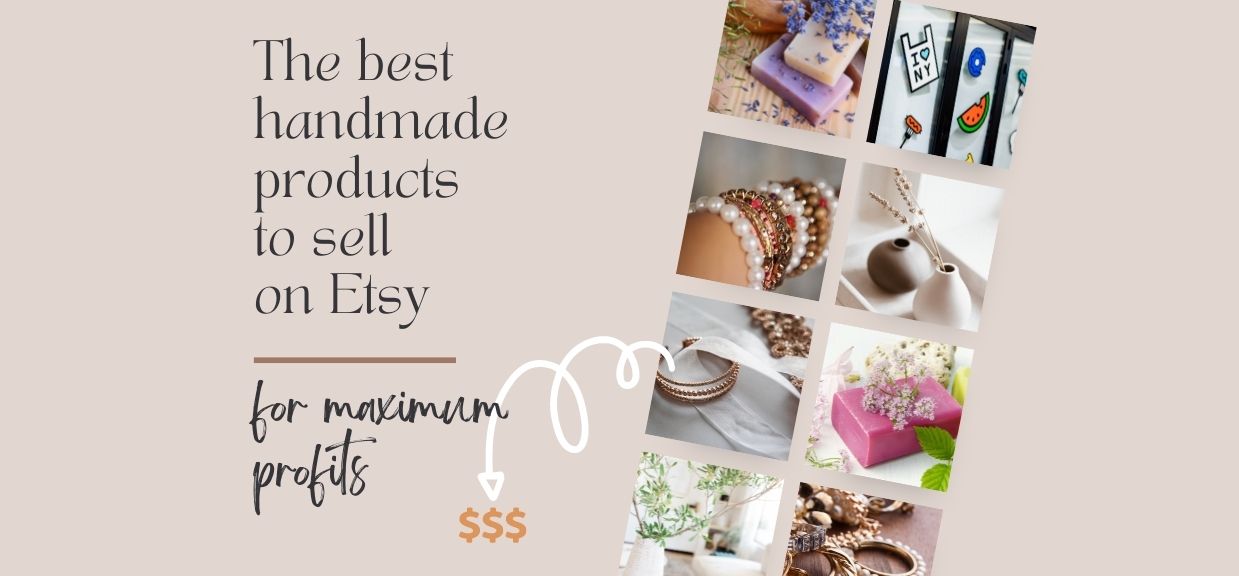
Not all handmade products are created equal on profitability. Some crafts look popular on Etsy but leave you with almost nothing after materials, time, and platform fees. Others, with the right materials and a bit of positioning, can return 70, 80, even 90 cents of profit on every dollar of revenue.
The difference isn’t luck. It’s understanding two things: what your product actually costs to make, and how much the market will pay for it.
Last updated: April 2026
Need to get your raw material and product inventory under control?
Try Craftybase - the inventory and manufacturing solution for DTC sellers. Track raw materials and product stock levels (in real time!), COGS, shop floor assignment and much more.
It's your new production central.
Why profit margins matter more than sales volume
You can sell a hundred items a week and still lose money. It happens more often than you’d think, especially when makers price by copying competitors rather than by calculating their own costs.
The formula is simple: profit margin = (selling price − total production cost) ÷ selling price.
Total production cost includes:
- Materials: every ingredient, component, packaging, and consumable
- Labour: your time at a fair hourly rate (yes, this counts)
- Overheads: a share of tools, electricity, listing fees, and subscription costs
If you haven’t accounted for all three, your margins are almost certainly lower than you think. A candle that looks like a $12 profit after materials might be a $3 profit once you factor in wax, wicks, fragrance, jars, labels, packaging, your 20 minutes of packing time, and Etsy’s cut.
The products below are consistently profitable because they score well on at least two of three factors: low material cost, fast to produce, or high perceived value that supports a premium price.
Read more: How to calculate your handmade labour costs
The best handmade products to sell for maximum profit
Candles
Candle margins are among the strongest of any craft category. A standard 8oz soy candle typically costs $2.50-3.50 to produce (wax, fragrance, wick, jar, label) and sells comfortably for $18-28 on Etsy. That’s a gross material margin of 85-90% before labour.
What makes candles particularly attractive is batch production. Once your process is set up, you can pour dozens of candles in a single session, which brings your per-unit labour cost down sharply.
The real profit lever with candles is fragrance differentiation. Seasonal or niche scents (autumn woodsmoke, specific botanical blends, collaboration scents with other brands) command higher prices without meaningfully increasing your production cost.
Gift sets are another strong play. A three-candle set at $55 has better margins than three individual candles at $20 each, because the packaging per item is lower and buyers perceive higher value.
Soap
Handmade soap has a material margin structure similar to candles. A bar of cold-process soap typically costs $1-2 in materials (oils, lye, fragrance, colourants) and retails for $7-12. Production time per bar is low once you’re making full batches.
The key cost to manage is fragrance oil. It’s the most expensive material in most soap formulas, and the amount you use directly affects your margins. Using Craftybase’s recipe costing, soapmakers can test different fragrance load percentages and see exactly how each batch’s margin changes before committing to a formula.
Natural and organic positioning lifts prices significantly. Buyers who seek out handmade soap are often avoiding commercial products for skin or ethical reasons, and they’re willing to pay a premium for that.
Read more: Why soapmakers need to track their inventory
Jewelry
Jewelry consistently ranks among Etsy’s highest-traffic categories, and for good reason: material costs are low relative to retail prices. Basic beaded or wire-wrapped pieces might contain $1-3 in materials and sell for $20-40. Even metal-worked pieces with higher material investment tend to command prices that protect margins.
Personalization is the main profit driver in 2026. Engraved name necklaces, birthstone rings, custom initial earrings: these pieces command a 30-50% premium over non-personalised equivalents for minimal additional material cost. The labour time increases slightly, but the price increase more than compensates.
Lightweight and easy to ship is a structural advantage for jewelry. Low shipping costs mean fewer buyers abandon at checkout, and you can offer free shipping more easily, which boosts conversion.
Read more: Inventory management for small jewelry businesses
Resin products
Resin is one of the fastest-growing craft categories on Etsy and offers impressive margins at small scale. Resin earrings cost roughly $2-3 to make (resin, pigments, moulds, hardware) and sell for $15-30. Larger coaster sets cost $8-12 to produce and sell for $30-60.
The investment required to start is low, moulds are reusable across many pours, and buyers perceive resin products as more complex and premium than the production reality.
Custom colour matching (letting buyers choose their palette) is a personalisation approach that works especially well for resin home decor and sells at higher price points without significant additional material cost.
Digital products
If you’re looking for maximum margin per unit, digital products win outright. There’s no materials cost per sale, no shipping, and no inventory. Once you’ve created the file, every sale is almost pure profit (less platform fees).
Popular categories in 2026 include:
- Printable wall art and home décor prints
- Digital planner templates and journal pages
- Sewing patterns, knitting patterns, and craft templates
- SVG files for Cricut and laser cutters
- Business templates and spreadsheets for other makers
The challenge with digital products is that once a design becomes popular, competitors copy it quickly. You need either a distinctive visual style, a niche audience that others aren’t serving, or a steady output of new designs to maintain momentum.
For makers who want to sell digital products alongside physical ones, the split approach works well: physical items as your main brand, digital versions as a passive income layer on top.
Home décor (personalised)
Generic home décor competes on price and loses to mass production. Personalised home décor is a different market.
Personalised items (custom name signs, door wreaths made to order, monogrammed cushion covers, custom print-on-demand art) attract buyers who are shopping for specific gifts. These buyers are less price sensitive than general browsers, and they’re less likely to comparison-shop on Amazon.
The categories that work best have a few things in common: clear personalisation, reasonable production time, and a look that can’t easily be replicated by a factory. Macramé wall hangings, custom embroidered hoops, and hand-lettered signs all fit this profile.
Bath and body products
Beyond soap, the wider bath and body category (bath bombs, body scrubs, lip balms, solid shampoo bars) offers strong margins with relatively accessible production processes.
Lip balm economics are striking: a batch of 50 tubes might cost $15-20 in materials (oils, waxes, fragrance, tubes, labels), with each tube retailing for $5-8. The per-unit labour cost is low because the process is simple and scalable.
Bath bombs have a similar structure, though fragrance and colourant costs add up at scale. The bundling strategy used in candles works here too. A bath gift set presented in a kraft box can retail for $40-55, and margins hold up well if you’re buying materials in bulk.
How to assess whether a product is worth making
Before adding any product to your range, run through these four questions:
1. What are my true production costs? Calculate materials, labour at your target hourly rate, and a pro-rated share of overheads. Don’t guess.
2. What’s the market price ceiling? Search Etsy for similar products. What are the top 10 sellers charging? What are buyers actually paying (look at number of sales, not just listing price)?
3. What margin does that give me? Divide your production cost by the realistic selling price. If you’re left with less than 30-40% gross margin, the product is risky. One bad batch, a fee increase, or a slow month can push you into loss.
4. Can I scale it? Some products are profitable at one-off but become time-consuming nightmares at volume. A product that takes 3 hours to make is fine for a limited run; it’s a problem if it becomes your bestseller.
Read more:
- Crafts with the highest profit margins (real numbers)
- Handmade business profit margin benchmarks by niche
Tracking your margins properly
Knowing which products are most profitable requires tracking: not just rough estimates, but actual cost data for each recipe, each batch, each product line.
Craftybase was built specifically for this. It calculates cost per unit automatically as you track materials, so you always know what each product actually costs to make (not just what you think it costs). When material prices change (and they do), your cost calculations update across every recipe that uses them.
It also imports orders from Etsy, Shopify, and other channels, so you can compare cost against actual selling price at scale and see exactly where your margins are sitting.
Start your free 14-day trial →
Frequently Asked Questions
What are the most profitable handmade products to sell in 2026?
The most profitable handmade products in 2026 are those with low material costs and high perceived value: candles, handmade soap, jewelry, resin products, and digital downloads consistently deliver gross margins above 70%. Digital products top the list at 85-90%+ net margin per sale, since there's no materials cost after the initial design work.
How do I calculate whether a handmade product is profitable?
To calculate profitability, subtract your total production cost (materials + labour + overhead share) from your selling price, then divide by the selling price. A product costing $5 to make and selling for $20 has a 75% gross margin. Aim for at least 30-40% gross margin before labour. Lower than that leaves little room for Etsy fees, slow months, or material price increases.
What handmade items sell best on Etsy?
The best-selling handmade items on Etsy are jewelry, candles, soap, personalised home décor, and digital downloads. These categories combine consistent buyer demand with the ability to differentiate on design, scent, personalisation, or niche. That's how small makers compete against mass production. Personalised items command a 30-50% price premium for minimal extra material cost.
How do I find the most profitable product for my craft business?
Test small batches of candidate products before committing to them at scale. Calculate your true production cost (materials, your time, and a fair share of overheads) and compare it against realistic Etsy prices for similar items. If you can't hit at least a 40% gross margin after all costs, that product is risky as a core earner. Use Craftybase to track recipe costs automatically so you're comparing real numbers, not estimates.
Can you make a living selling handmade products on Etsy?
Yes, many makers earn full-time income from Etsy. But it requires more than making things people like. You need products with genuine margins, a consistent volume of sales, and costs that stay under control as you scale. The makers who do well long-term know their numbers: they track material costs per recipe, review their margins regularly, and cut or reprice products that aren't pulling their weight.